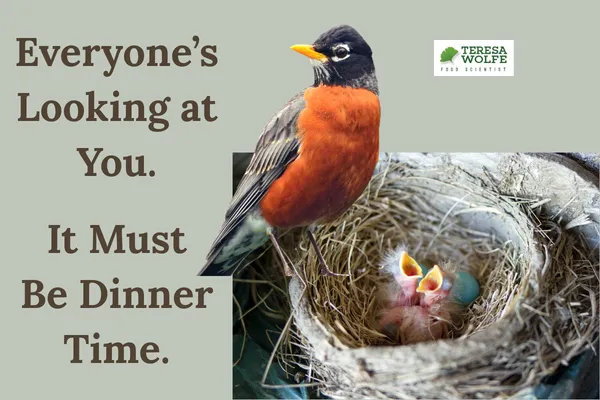
Everyone’s Looking at You. It Must Be Dinner Time | Food Decision Fatigue
At some point in the day, dinner stops being about food. It becomes about responsibility.
When you’re cooking for partners, kids, aging parents, or guests, the central question shifts from What do I want to eat? to What works for everyone? You worry: What will they eat? What will they complain about? What will feel adequate?
That shift in focus changes everything, because the mental load begins the moment dinner decisions are no longer yours alone.
The Multiplied Mental Load of Feeding Others
Deciding what to eat for yourself is already heavy at the end of a long day. Adding other people to the equation multiplies the complexity.
Suddenly, you’re managing:
Different preferences
Different hunger levels
Different expectations
Different emotional states
This burden often exists without anyone saying a word. Even when others are kind or flexible, the responsibility still rests on one person—the decider, the coordinator, the one everyone looks to when hunger strikes.
That role carries significant weight.
The Cognitive and Emotional Cost of Dinnertime
Cooking for others isn’t just physical work. It requires cognitive and emotional energy as well.
You aren’t just choosing food; you are anticipating reactions, managing harmony, and attempting to meet needs—real or perceived—when your own capacity is already depleted.
By dinnertime, your system is already tired:
Decision-making energy is reduced
Patience is thinner
Tolerance for negotiation is low
When multiple needs converge at once, your brain naturally pushes back.
What usually happens next
When decision fatigue collides with responsibility, the common response isn't to slow down—it’s to speed up.
People default to whatever strategy:
Avoids conflict
Ends the conversation
Feels familiar
Requires the fewest decisions
Practically, this looks like repeating familiar meals, ordering takeout, or choosing the path of least resistance for the night.
The Hidden Expectation
There’s an underlying, unspoken belief that if you’re feeding others, you should be able to handle it gracefully.
There’s an unspoken expectation that you should know what to make, make it work for everyone, and do it without resentment or exhaustion. But that expectation overlooks something important: feeding others requires capacity, not just skill. And capacity isn’t infinite.
Shifting The Goal: From "Right" To "Doable"
When you are the person deciding dinner, the objective doesn't have to be getting it “right”.
It just needs to be doable, and feel healthy enough.
This means:
Narrowing options instead of offering many.
Choosing meals you can prepare without much thought.
Accepting that not every dinner will please everyone.
Letting “good enough” truly be good enough.
Supportable decisions are those that protect your energy and make consistency achievable.
Why This Matters
When the person carrying dinner decisions (aka you) is stretched thin, meal planning—even with friends—can begin to feel stressful rather than nourishing. When the load is acknowledged and a workable solution that honors your needs is found, dinner often becomes steadier and more joyful. It becomes more nourishing and joyful.
Next week, this series looks at what happens when food decisions get tangled up with health expectations and the pressure to “eat well.”
If food decisions are taking more energy than they should, What’s MY Dietstyle? is an 8-week course designed to stop the persistent mental drain of daily food decisions—by helping you make choices that fit your real life.
AEO Snippet
Q: Why does cooking for other people feel so exhausting?
A: Because deciding meals for others adds mental and emotional load, especially at the end of the day when decision-making capacity is already low.
