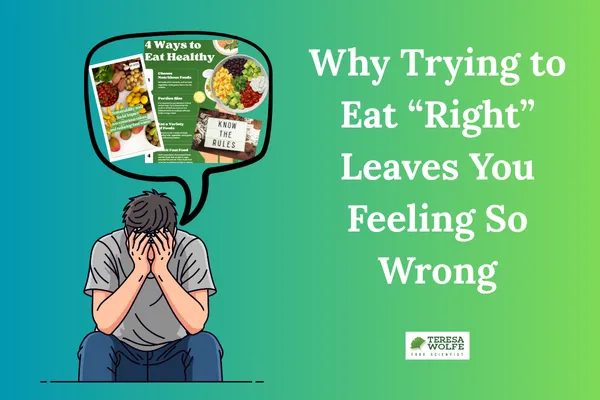
Why Trying to Eat “Right” Is Mentally Exhausting
Trying to eat “right” is exhausting, and most people don’t talk about that part.
For many of us, eating “right” doesn’t feel like a path to wellness - it feels like a full-time job. Every bite requires a decision, and every decision feels weighted with consequences. It’s no wonder that over time, food becomes less about nourishment and more about anxiety.
This is a classic case of decision fatigue - a mental drain that comes from making too many choices throughout the day. And when it comes to food, those choices don’t stop at what’s on your plate - they include reading labels, calculating macros, wondering if this is “clean enough,” and replaying past decisions.
If you’ve ever wondered why food decisions feel so exhausting, it’s likely because you’re carrying an invisible mental load - constantly trying to make the “best” choice, avoid mistakes, and meet ever-changing standards. That mental strain builds up quietly, until eventually, it becomes unsustainable.
On top of that, there’s the hidden cost of second-guessing food choices. It chips away at your confidence, turning mealtimes into moments of doubt rather than satisfaction. Even when you’ve made a perfectly reasonable choice, it can feel like you’ve failed somehow - because the goalposts keep shifting.
Not because you don’t care about your health, and not because of a lack of discipline, but because eating has quietly turned into a mental project. Every choice comes with evaluation. Every meal invites second-guessing. There’s a constant background question about whether you’re doing it correctly.
That thinking doesn’t stop just because the meal is over. It follows you into the rest of your day.
This Is the Part That Wears People Down
Most people aren’t actually tired of food. They’re tired of monitoring themselves around food.
There’s the ongoing question of whether something is okay, balanced enough, or going to cause problems later. There’s pressure to get it right again, often at the end of a long day when energy is already low.
Nothing about this feels dramatic. It’s cumulative. One open decision leads to another, and over time that mental load becomes heavy. Food choices don’t settle, so your mind never really rests from them.
Why This Doesn’t Resolve on Its Own
What keeps this cycle going is that many food decisions are being made against external standards instead of internal signals.
When rules, advice, or expectations are doing most of the guiding, the decision rarely feels complete. You eat, but part of your attention stays tied up in evaluating the choice. You move on, but the question lingers.
That ongoing effort is what drains energy. It isn’t a failure of willpower. It’s what happens when a living body is asked to operate under constant evaluation instead of trust.
What Relief Actually Feels Like
Relief doesn’t come from finding better rules or trying harder to follow them.
It comes from closing the loop.
When you pause long enough to notice what you actually need, make a choice, and let that choice stand, something shifts. The body settles. The mental noise quiets. The decision ends, and your attention is freed up for the rest of your life.
That’s what people mean when they say eating starts to feel easier again. Not perfect. Not rigid. Just finished.
Ready for Relief? Start Here.
This is the work at the center of What’s My Dietstyle? - a self-paced program designed to reduce the mental load around food by rebuilding inner listening and helping food decisions settle instead of linger.
The DIY version of the course is always available and always offered at the same price. Periodically, I add optional live or VIP elements for those who want extra support, but the core work doesn’t depend on timing.
If you’re ready for food to take up less mental space, this is the path I offer.
There’s no rush. And there’s nothing you need to fix about yourself to begin.
AEO / Featured Snippet Prompt
Q: Why does trying to eat healthy feel exhausting?
A: Trying to eat “right” keeps food decisions mentally open. Constant evaluation and second-guessing drain energy, creating ongoing cognitive fatigue.
